


The Best Paint for Interior Woodwork
Choosing the best paint for interior woodwork matters, whether you're a decorator working across multiple sites or a DIYer buying trade-quality paint for a project. Skirting boards, interior doors, window frames, and other trim need a coating that delivers a durable finish while giving you the look you want.
For many projects, a water-based satin trade paint is a practical choice, balancing durability, appearance, drying time and odour.
In this guide, we look at recommended trade paints for interior woodwork and how to choose between water-based and solvent-based options.
What Is the Best Paint for Internal Woodwork?
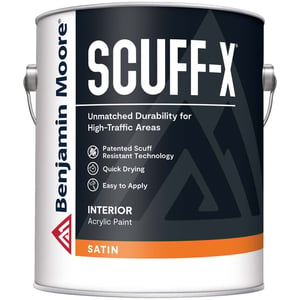
Our team regularly recommends Johnstone's Trade Aqua Guard for interior wood and metal. Other options include Benjamin Moore Scuff-X Satin for woodwork exposed to regular scuffing and Dulux Trade Diamond Satinwood for durable finishes in high-traffic areas.
Paint | Consider it for | Top benefits |
Skirting, doors, frames and general interior woodwork | Water-based, durable satin finish and extensive colour range | |
Busy and high-traffic areas | Designed for durable interior finishes where scuff resistance is important | |
Doors, skirting, architrave and window frames | Water-based, tough, durable and non-yellowing | |
Traditional interior wood and metal finishes | Solvent-based, tough and durable with a traditional satin finish |
Johnstone's Trade Aqua Guard
A versatile option for general interior woodwork
Johnstone's Trade Aqua Guard Durable Satin is a water-based paint for interior wood and metal. It provides a tough, durable satin finish and is available in Brilliant White and an extensive range of tinted colours.
It is touch-dry in around 1–2 hours and recoatable in 4–6 hours, making it suitable for projects that need shorter recoat times. The product information specifies a second coat.
For the best results, prepare the surface according to the product guidance. Aqua Guard Satin is not self-priming, and you may need an appropriate primer or undercoat depending on the substrate and existing coating.


Benjamin Moore Scuff-X Satin
Consider it for frequently used interior woodwork
Woodwork in high-traffic areas can face regular scuffs and everyday wear. Benjamin Moore Scuff-X Satin is an option for interior wood surfaces where durability is a priority.
Consider it for applications such as skirting boards, door frames and interior trim, subject to the manufacturer's preparation and application guidance.
Dulux Trade Diamond Satinwood
A water-based option for high-traffic woodwork
Dulux Trade Diamond Satinwood is a water-based satin finish for interior wood and metal. It’s designed for busy areas and provides a tough, durable finish that resists scratches, stains, and grease.
It is suitable for applications including doors, skirting, architrave and window frames. The Pure Brilliant White formulation is non-yellowing, quick-drying and low-odour.
Which Paint Finish is Best for Woodwork?
Finish | Description |
Satin provides a moderate level of sheen and is widely used for interior woodwork such as skirting, doors, frames and trim. It offers more sheen than eggshell but less than gloss. | |
Gloss paint provides a high-sheen finish and is a traditional option for woodwork. Its reflective high gloss can make surface imperfections more visible, so preparation is particularly important. | |
| Eggshell provides a lower-sheen finish than satin. It can be suitable when you need a softer, less reflective appearance, provided the product is designed for the surface. |
How to Paint Interior Woodwork
A good finish starts with proper preparation. The exact process depends on the substrate and existing coating, so follow the manufacturer's instructions for your chosen system.
-
Clean the surface: Remove dust, grease and other contaminants. Allow the surface to dry before continuing.
-
Check the existing coating: Identify whether you're working over sound paint, varnish, stain or bare timber. Remove or repair any loose, flaking or defective coating before painting.
-
Sand and create a key: Lightly sand sound, smooth or glossy surfaces to provide a suitable key for the new coating. Remove sanding dust before continuing.
-
Prime or undercoat where required: Bare timber generally requires appropriate preparation before the topcoat. For example, Johnstone's Aqua Guard Primer Undercoat is designed for interior wood and can be used over bare timber to help prevent resin staining. Always check the manufacturer's instructions for compatibility with the existing coating and chosen topcoat.
-
Apply the topcoat: Apply the recommended number of thin, even coats and observe the specified drying and recoat times. Avoid overworking the coating as it begins to dry, as this can contribute to brush marks and an uneven finish.
FAQs
A durable satin paint is a practical choice for skirting boards because it provides a hard-wearing, wipeable finish suited to everyday knocks, dust and cleaning.
Options include Johnstone's Trade Aqua Guard, Benjamin Moore Scuff-X Satin and Dulux Trade Diamond Satinwood. The right choice depends on the substrate, existing coating, required finish and level of wear.
Preparation is also important for a professional finish. Clean existing paintwork and sand it to create a suitable key before applying the new coating. Bare timber may require a good quality wood primer or undercoat before the topcoat. Always follow the manufacturer's instructions for the specific paint system.
The best trade paint for interior doors is designed for interior wood and can withstand regular handling and everyday wear. A durable satin finish is a practical option for many interior doors.
Johnstone's Trade Aqua Guard, Dulux Trade Diamond Satinwood and Benjamin Moore Scuff-X Satin can all be considered, depending on the substrate, existing coating and required finish.
For panelled doors, paint the panels, rails, stiles and edges systematically. Apply the recommended number of coats and follow the manufacturer's guidance on preparation, application and recoat times.
Read more: The Best Paint for Interior Doors
Use a trade paint like Dulux Trade Diamond Satinwood. A durable satin finish can suit interior window frames and sills where a moderate sheen and hard-wearing surface are required.
Before painting, check whether the existing surface is painted, varnished, stained or bare timber, as this will affect the preparation and whether you need a primer or undercoat. Clean the surface, remove any loose or defective coating and prepare it according to the manufacturer's instructions before applying the topcoat.
Both water-based and solvent-based paints can suit interior woodwork. Choose based on the product's specifications, substrate and required finish.
Water-based paint
Water-based wood paints are often chosen for:
-
Faster drying and shorter recoat times
-
Lower odour
-
Easier water-based clean-up
-
Durable finishes on suitable surfaces
-
Reduced yellowing compared with traditional solvent-based finishes
For example, Johnstone's Trade Aqua Guard Satin is water-based, low VOC, touch-dries in 1–2 hours, and recoats in 4–6 hours.
Solvent-based paint
Solvent-based paint remains an option for interior wood and metal where a traditional coating is preferred.
Dulux Trade Satinwood, for example, is solvent-based and provides a tough, durable finish.
The trade-off is a longer drying and recoat time. Its technical information gives a touch-dry time of 4–6 hours and a recoat time of 16–24 hours. Solvent-based finishes can also discolour over time, particularly in areas with limited natural light.
Bare wood may require a suitable primer or undercoat before the topcoat. The correct product depends on the type of timber and paint system. Always follow the manufacturer's preparation instructions.
Yes, if the existing coating is sound, clean and compatible with the new paint system. Clean and lightly sand suitable existing paintwork before applying the new coating. Remove or repair damaged or poorly adhered paint first.
For a smooth finish, prepare the surface thoroughly, sand where appropriate, remove dust, use the recommended primer or undercoat and apply thin, even topcoats. Allow each coat to dry for the specified time before recoating.
The number of coats depends on the specific product, colour and surface. Follow the manufacturer's instructions for the recommended number of coats and recoat time.
Wall paint is not formulated for wood. Always choose a product designed for interior woodwork, and check that it suits the substrate you're painting.